
 No Comments
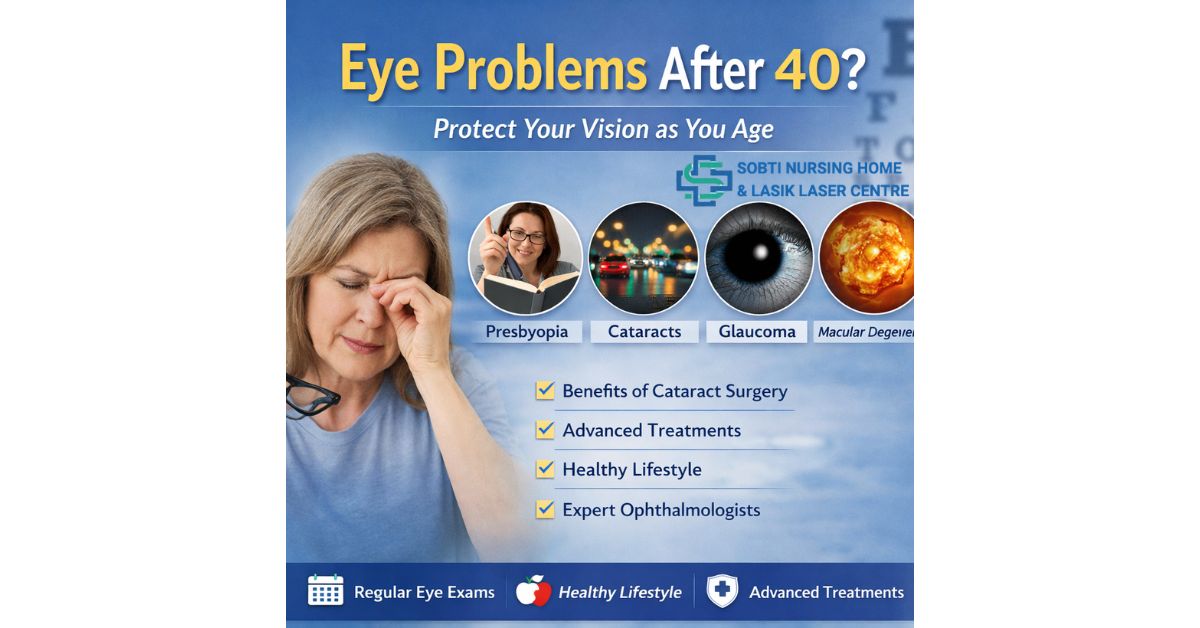
As we age, our bodies naturally undergo changes, and our eyes are no exception. Many people start experiencing noticeable eye problems after age 40, which can affect daily life, work, and overall wellbeing. At Sobti Nursing Home, we prioritize patient education and early detection to ensure you maintain healthy eyesight for years to come.
In this blog, we’ll discuss common age-related eye issues, symptoms, preventive strategies, and treatment options—all designed to help you protect your vision.
Why Do Eye Problems Occur After 40?
Aging affects the eyes in multiple ways:
- Lens elasticity decreases: Making it harder to focus on close objects (presbyopia).
- Reduced tear production: Leading to dry eyes and irritation.
- Retinal changes: Increasing the risk of macular degeneration and diabetic retinopathy.
- Increased eye pressure: Raising the likelihood of glaucoma.
Genetics, lifestyle, and underlying medical conditions like diabetes or hypertension can accelerate these changes.
Common Eye Problems After Age 40
Here are some frequently encountered eye conditions in people over 40:
Eye Problem | Symptoms | Typical Age of Onset | Treatment Options |
Presbyopia | Blurred near vision, difficulty reading small print | Early 40s | Reading glasses, multifocal lenses, vision correction surgery |
Cataracts | Cloudy or hazy vision, glare, difficulty at night | 50s and beyond | Cataract surgery (lens replacement) |
Glaucoma | Gradual loss of peripheral vision, tunnel vision | 40s+ | Eye drops, laser therapy, surgery |
Age-related Macular Degeneration (ARMD) | Central vision loss, distorted vision | 50s+ | Anti-VEGF injections, lifestyle changes, vision therapy |
Diabetic Retinopathy | Blurred or fluctuating vision, dark spots | Any age with diabetes | Laser therapy, injections, strict glucose control |
Dry Eyes | Burning, itching, irritation, redness | 40s+ | Artificial tears, lifestyle modifications, punctal plugs |
These eyesight problems with age often develop gradually, so regular eye exams are crucial to detect them early.
How Can You Protect Your Eyesight After 40?
Preventive eye care is vital to reduce the risk of serious vision problems. Here are some practical eye care tips for people over 40:
- Regular Eye Examinations
Schedule comprehensive eye exams every 1–2 years, even if your vision seems fine. Early detection of conditions like glaucoma and cataracts can prevent irreversible damage. - Maintain a Healthy Lifestyle
- Eat a diet rich in leafy greens, fruits, and omega-3 fatty acids.
- Exercise regularly to maintain good blood circulation.
- Avoid smoking, which accelerates macular degeneration.
- Manage Chronic Conditions
Properly control diabetes, hypertension, and cholesterol levels to prevent complications like diabetic retinopathy. - Protect Your Eyes
- Wear sunglasses with UV protection outdoors.
- Reduce screen strain by following the 20-20-20 rule: every 20 minutes, look at something 20 feet away for 20 seconds.
- Hydrate and Lubricate
Use artificial tears for dry eyes, especially in air-conditioned environments. - Limit Blue Light Exposure
Consider blue-light filtering glasses for prolonged digital device use.
When to See an Eye Specialist
Consult an ophthalmologist immediately if you notice:
- Sudden vision loss or blurriness
- Severe eye pain or redness
- Flashes of light or new floaters
- Difficulty seeing at night
- Distorted or wavy vision
At Sobti Nursing Home, our team of experienced ophthalmologists provides accurate diagnosis and advanced treatments tailored to patients over 40.
Treatment Options at Sobti Nursing Home
Our eye care services focus on both medical and surgical interventions:
- Prescription Eyewear: Glasses or contact lenses for presbyopia and refractive errors.
- Cataract Surgery: Safe, modern procedures with minimal recovery time.
- Glaucoma Management: Eye drops, laser therapy, and microsurgery.
- Retinal Treatments: Laser therapy, injections, and regular monitoring for ARMD and diabetic retinopathy.
- Dry Eye Solutions: Lubricants, lifestyle advice, and minor procedures like punctal plugs.
We combine the latest technology with patient-focused care to ensure optimal outcomes.
Lifestyle and Vision: Everyday Tips
- Adequate Lighting: Ensure proper lighting while reading or working.
- Limit Alcohol and Caffeine: Excessive consumption can worsen dry eyes.
- Exercise Your Eyes: Simple exercises like focusing on near and far objects can reduce strain.
- Monitor Screen Time: Frequent breaks and anti-glare screens help protect your eyes.
For comprehensive treatment and advanced care, visit the Best Eye Hospital in Kurukshetra where our specialists provide expert management for age-related eye conditions.
Conclusion
Aging brings natural changes, but eye problems after age 40 can be managed effectively with early detection and proper care. At Sobti Nursing Home, we combine expert ophthalmology, advanced technology, and patient-centered care to help you maintain healthy vision.
Don’t wait for symptoms to worsen—schedule a comprehensive eye check today and take the first step toward preserving your precious eyesight.
FAQs About Eye Problems After Age 40
Q1: What is the most common eye problem after 40?
A: Presbyopia, or difficulty focusing on nearby objects, is common, followed by cataracts and early signs of glaucoma.
Q2: Can eye problems after 40 be prevented?
A: While aging cannot be stopped, regular eye exams, a healthy lifestyle, and protective measures can significantly reduce risks.
Q3: How often should people over 40 get eye exams?
A: Ideally, every 1–2 years, or more frequently if you have risk factors like diabetes, high blood pressure, or family history of eye disease.
Q4: Are cataracts dangerous if untreated?
A: Cataracts gradually impair vision, affecting quality of life. Early surgery is safe and restores clear vision effectively.
Q5: What are the warning signs of glaucoma?
A: Glaucoma often shows no early symptoms. Regular eye pressure checks and visual field tests are essential for detection.
Q6: How can I protect my eyes at home?
A: Adequate lighting, regular breaks from screens, proper hydration, and a nutritious diet rich in vitamins A, C, E, and omega-3s help maintain eye health.

Leave A Comment